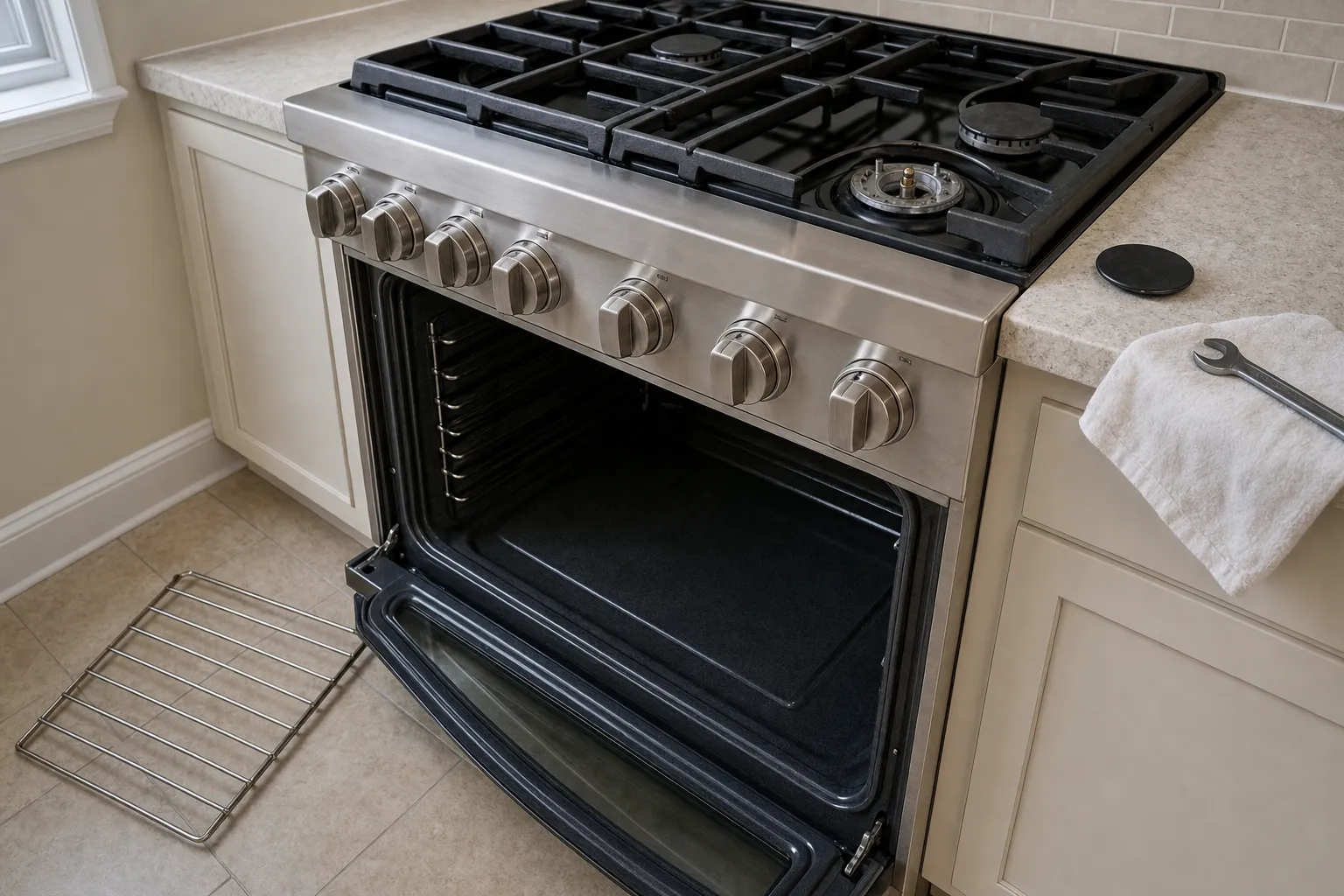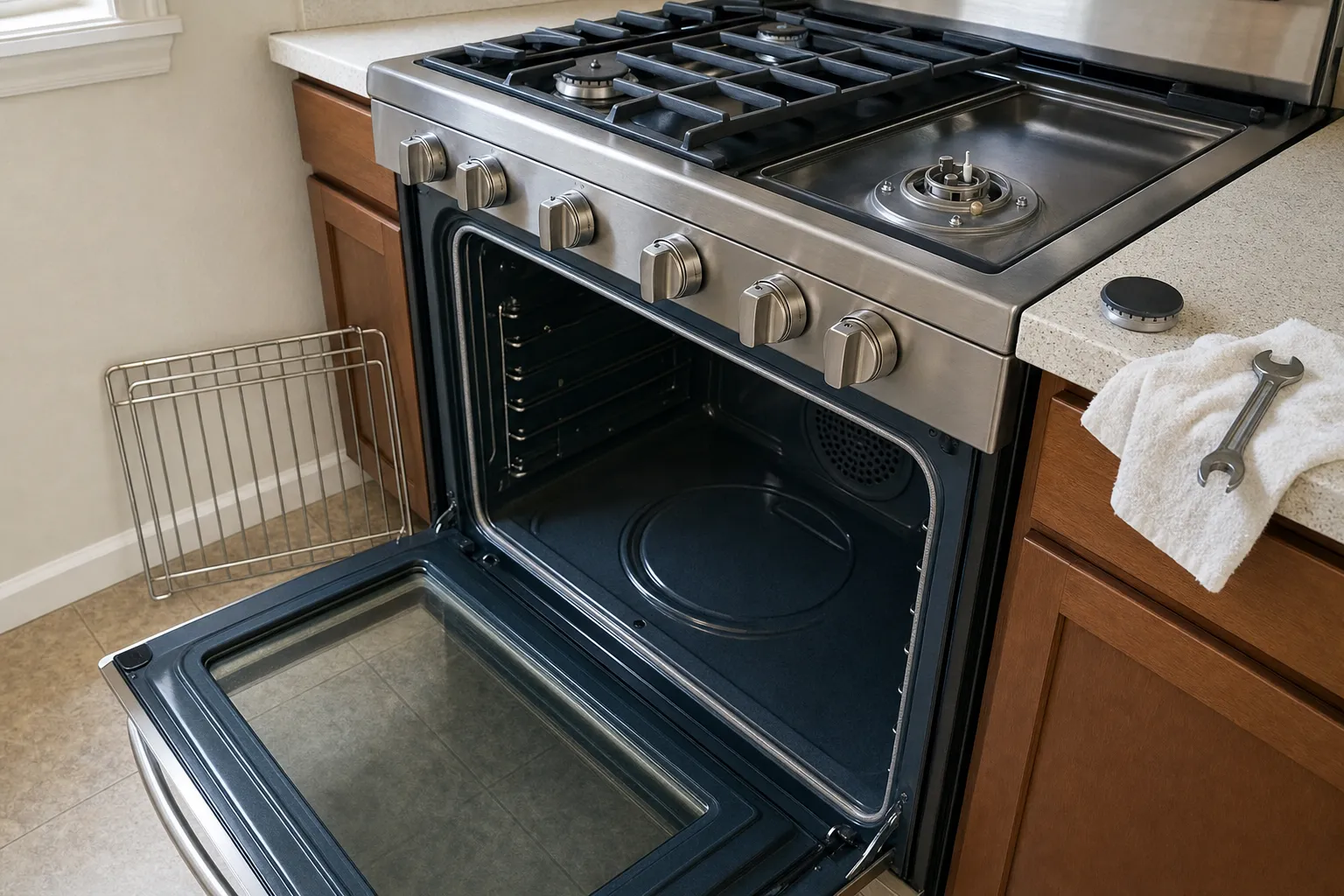
- Electrode on the burner base
- Burner cap
- Burner control knob
Spark ignition · Juanita
Wolf Igniter Electrode
The igniter electrode is the ceramic-insulated post beside each Wolf burner; the spark jumps from its metal tip to light the gas. After the burner catches, it goes on watching: Wolf explains that any change in the electrical resistance between electrode and burner makes it try to relight, which is normal reignition.
Greg Lindqvist Cooking-appliance technician — gas ignition and burners · 18 years in the trade
What We Usually Find · Juanita
- Most often
Nothing is broken; the electrode is wet. After a boil-over or a generous wipe-down, water around the tip lets the spark leak to ground before it reaches the gas.
- Often
Burnt-on food or a film of cleaner on the tip. The spark weakens or wanders, so the burner needs several clicks to catch, or carries on clicking once it has lit.
- Sometimes
The cap, not the electrode: sitting off-centre or tilted, it puts the gas somewhere other than where the spark lands.
- Rarely
A cracked, chipped or loose ceramic insulator, typically after a heavy pan or a grate knocked it. That is the one case where the electrode itself is replaced.
What it means for the repair
We dry and clean before replacing anything. Most electrodes we examine in Juanita work once the tip is clean and the well is dry, so the visit often ends with nothing on order. A cracked insulator, a loose electrode or a tip worn away is different: that electrode is swapped for a genuine Wolf part, and every burner is lit in turn afterwards to hear the reignition go quiet over a steady flame.
One burner silent while its neighbours click points first at its own electrode or lead; every burner silent at once almost never does — that is power or the spark module.
Before you call
Work with the knobs off and the top cool. Lift the cap; if the burner is wet, let it dry, and Wolf suggests a hair dryer on a low setting to speed that up. A tip that is visibly dirty can be brushed gently with a soft-bristle toothbrush. Set the cap back flat and centred, then try the burner once. If the ceramic is cracked, or the electrode moves when you touch it, stop there.
In Juanita kitchens
Many of Juanita’s lakeside remodels fit a Wolf range into a narrow galley, where pots crowd together and a boil-over reaches the next burner as readily as its own. Air off Juanita Bay stays damp for much of the year, so a soaked burner takes longer to dry than owners expect. Most electrode calls here are about water, not wear.
What it costs to put right
- Igniter or spark module $180 to $440
A flat $89 pays for the visit and the whole diagnosis; approve the repair and that $89 comes off its price.
Asked about this one
How can I tell whether my Wolf igniter electrode needs replacing?
With the burner cool and dry, look at the white ceramic around the tip. Cracked, chipped or loose means replacement. If it looks whole and the burner still will not spark after drying and a gentle clean, the lead or the module output is next in line. Wolf Repair Kirkland, (425) 699-2400, tests both on the visit.
Why does my burner keep clicking after the flame is lit?
The electrode rechecks the flame once it is burning and tries again whenever the electrical path to the burner shifts. Water, a dirty tip, a draught across the burner or a cap out of line can each cause that. Dry and clean first; clicking that carries on over a steady flame needs a technician.